
Abdominal wall · Patient guide
The Mesh Hub
If you have searched “hernia mesh,” you have met the lawsuits, the horror stories and the advertising. This page is the antidote — everything patients actually ask about mesh, answered straight, in one place.
Mesh is the single most feared word in hernia surgery, and most of the fear is misdirected. I have implanted mesh for three decades, removed it when it caused trouble, and repaired plenty of hernias without it. I have no product to sell you — only the evidence, and an honest account of the trade-offs.
The short version: mesh is a lightweight synthetic patch your own tissue grows into, reinforcing a repair the way a patch reinforces a jumper’s elbow. Surgeons have been doing this since the 1940s. Used in the right operation, in the right plane, it is one of the reasons modern hernia repair works as well as it does. Used badly — or conflated with pelvic devices from the litigation headlines — it becomes a villain it never deserved to be.
Mesh is a tool, not a villain. The question isn’t “should I avoid mesh?” — it’s “is the surgeon using the right mesh, in the right place, with the right technique?” That’s the conversation worth having.
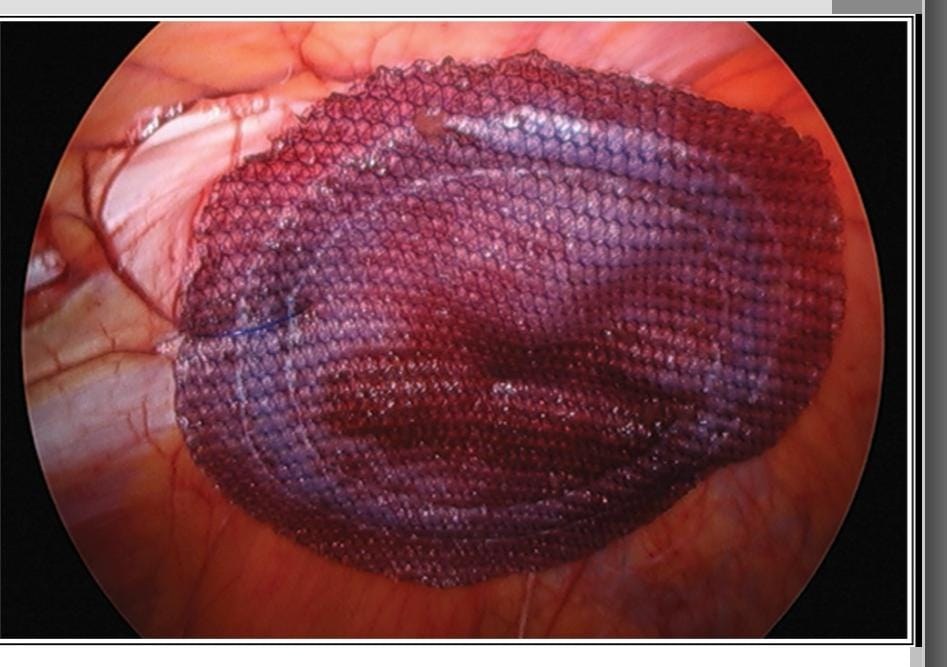
And when mesh causes trouble — I deal with that too
Honesty cuts both ways. Mesh problems are uncommon, but they are real — infection, chronic pain, a repair that has failed around its mesh. Part of my abdominal wall practice is removing mesh that has caused trouble and reconstructing the repair properly. If you are living with a mesh complication, that is exactly the kind of problem to bring in rather than put up with.
Is the mesh used for my hernia the same mesh as in the lawsuits? Largely, no. Many of the products at the centre of major litigation were pelvic mesh devices used transvaginally for prolapse and incontinence — a different product, placed in a different location, with a very different complication profile. Abdominal and groin hernia meshes are lightweight synthetic sheets with decades of follow-up behind them. The risks article has the detail.
Recurrence. Groin hernias repaired without mesh come back in around 10–15% of patients; with mesh, under 2%. For ventral and incisional hernias the case is stronger still. A failed first repair means scar tissue, distorted anatomy and a genuinely harder second operation — the evidence, spelled out.
Chronic pain after hernia repair is real — and it predates mesh. It is reported in somewhere between 6% and 20% of groin repairs, mesh or no mesh. The strongest predictors are nerve handling during surgery and pre-operative pain, not the presence of mesh itself. Meticulous technique is the best prevention, and it is a fair question to ask any surgeon.
In selected circumstances, yes — a Shouldice or Desarda tissue repair for a small groin hernia in a younger patient, small umbilical hernias, or contaminated fields. It is a different trade-off, not a better one, and a completely reasonable conversation to have.