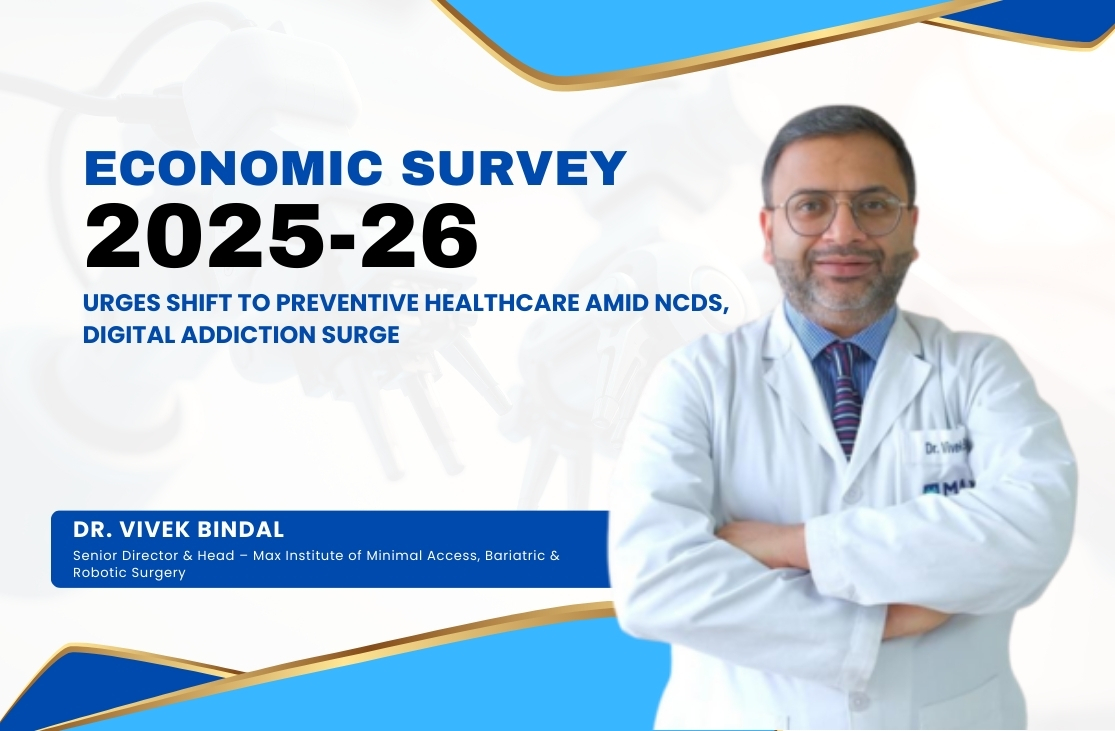
India’s Economic Survey 2025-26 marks a pivotal policy pivot from treatment-heavy healthcare to preventive and public health strategies, arguing that long-term economic productivity hinges on healthier human capital. Economic Survey spotlights the surging non-communicable diseases (NCDs) burden—cardiovascular disorders, diabetes, obesity, and mental health issues now hitting working-age groups alongside persistent communicable threats.
Tackling Digital Addiction in Youth
A stark warning targets the explosion of digital addiction and screen-driven mental health woes among children and adolescents. The Survey pushes structured fixes: cyber-safety education, peer-mentor programs, mandatory school physical activity, parental screen-time training, age-tailored digital policies, and platform accountability for harmful content. It eyes network safeguards like split data plans for education versus recreation and auto-blocks on high-risk categories.
Network interventions like tiered data plans for education versus recreation and auto-blocks on risky categories are proposed, with Tele-MANAS expansion for early addiction counseling integrated into schools and colleges to foster help-seeking norms
Dr. Kirti Anand, Consultant Psychiatrist at Paras Health, calls this focus “timely and necessary,” adding, “Screen addiction, anxiety and behavioural disorders among children and young adults are emerging as a silent productivity risk. Policy must now move beyond awareness to action mandating physical activity in schools, strengthening counselling infrastructure, guiding parental screen use, and holding digital platforms accountable for mental harm.”
Tech for Surveillance and Prevention
Technology takes center stage with ABDM, UDISE+, AISHE, and AI pinpointing “health hotspots” like obesity in urban slums or digital addiction in peri-urban schools. Public-private partnerships fuel frontline tools—AI chatbots like ASHABot, mHealth apps, ASHA Kirana dashboards—for NCD control, outbreak monitoring, and maternal-child outcomes.
Dr. Aashish Chaudhry, Managing Director at Aakash Healthcare, praises digital strides while noting risks, “India has made strong progress in saving lives. Mothers are safer during childbirth. More babies survive their first year. Fewer children die before the age of five. These are not small achievements. They show that better hospitals, vaccinations, nutrition programmes, and schemes like Ayushman Bharat are actually working on the ground. Digital health is another big step forward. Services like e-Sanjeevani and Ayushman Bharat Digital Mission (ABDM) have made healthcare reach people who earlier had no easy access to doctors. For patients in small towns and villages, this can truly change lives. But the Survey also reminds us that new health problems are rising fast. Obesity is no longer an urban India problem, or limited to a specific age group. Incidence of heart disease and other lifestyle-related diseases is also increasing. Another serious concern is digital addiction and mental health issues, especially among young people. However, the survey’s balanced approach is commendable. It talks about technology, but also about traditional food, yoga, physical activity, and human connection. Health is not only about medicines. It is about how we live every day. India’s future depends on a healthy population, both physically and mentally. This Survey gives us direction. Now, we must turn these ideas into daily action, in homes, schools, and communities.”
Obesity’s Food and Lifestyle Roots
Obesity emerges as a core NCD driver, tied to ultra-processed foods and modern habits. Dr. Santosh Moses, Partner-Health Transformation at Grant Thornton Bharat, links it directly. He says, “The Economic Survey 2026 signals a clear warning: India’s rising obesity burden is tightly linked to the rapid spread of ultra-processed foods. What was once a nutrition transition has become a public health and economic risk. Diets high in sugar, salt and unhealthy fats are fuelling obesity, diabetes and heart disease—undermining productivity and driving long-term healthcare costs. This is no longer just about individual choice; it is about food environments shaped by pricing, marketing and convenience. The policy response must shift from treatment to prevention—through smarter taxation, clearer food labelling, restrictions on marketing to children, and stronger promotion of affordable, nutritious diets.”
Dr. Vivek Bindal, Head of Bariatric Surgery at Max Super Speciality Hospitals Patparganj, details causes and cures stating, “Rising obesity is driven by sedentary lifestyles, screen addiction, ultra-processed foods, stress, and poor sleep, especially among youth. Prevention needs early lifestyle education, regular physical activity, healthier diets, reduced screen time, supportive urban design, and strong family and school-based interventions promoting long-term healthy habits.”
Dr. Manisha Arora, Director-Internal Medicine at CK Birla Hospital Delhi, stresses screening and habits. She remarks, “The Economic Survey’s focus on non-communicable diseases, particularly obesity, is both timely and much needed. Early obesity screening at the primary-care level is extremely important, as it helps identify not only visible obesity but also “hidden obesity” or metabolic risk in individuals with normal body weight. Many people, especially children and young adults, may appear healthy but already have underlying insulin resistance or lipid abnormalities. From a prevention perspective, limiting recreational screen time to no more than two hours a day is a key step. Patients should be encouraged to incorporate short walks of 10–15 minutes, two to three times daily, even indoors if necessary. Mindful eating without screens is equally important, along with replacing sugary beverages with water. Regular movement breaks during prolonged sitting hours, adequate physical activity, and prioritising 7–8 hours of quality, uninterrupted sleep can collectively make a significant difference in preventing long-term metabolic complications.”
Dr. Vinay Agarwal, former National President of Indian Medical Association, frames the “double burden”. “India has an inappropriate share of both infectious and non infectious diseases. Burdened by the thrifty gene inherited over centuries the current lifestyle and food choices end up in fatty liver, obesity, dyslipidemia and diabetes mellitus. Add the stressful modern life we have the recipe for hypertension, stroke and cardiovascular diseases. 7 hours of uninterrupted sleep, traditional food with fruits, vegetables and fish plus 30 minutes of exercise daily could save us,” Agarwal remarks.
The Survey wraps by stressing sustained investments in prevention, nutrition, mental wellness, and community systems to secure India’s demographic dividend.
RoboticSurgery #AbdominalWallReconstruction #ETEP #MedicalEducation #Robotics #SurgicalInnovation
Dr. Vivek Bindal – Best Hernia Surgeon in Delhi, Best Gallbladder Surgeon in Delhi & Best Bariatric Surgeon in Delhi